My Inner Sister Hildegarde

On Friday we rented the movie Philomena. For those of you who are still waiting for it to show up on the streaming Netflix listing, here is your spoiler alert.

In the climax of the movie, Sister Hildegarde, the old nurse who was responsible for delivering Philomena’s baby and keeping Philomena from ever being reunited with her son who had been sold in adoption, unrepentantly reveals her heart. Hildegarde declares that whereas she kept herself chaste her whole life, Philomena had committed fornication so she and her child were deserving of punishment.

Hildegarde is looking for fairness in life and recognition for her perseverance. It is easy for me to identify with her struggle. I grew up in the church absorbing a mix of moral teaching and warnings to avoid transgression.

One of the earliest songs taught in Sunday school had the lines, “be careful little hands what you do, be careful little mouths what you say, be careful little feet where go”. There was also a line about the “Father up above looking down in love”, so it must have been hitting the shame button rather than the guilt button. I got the message: don’t screw up.

A particular Bible quote burned into my memory was “be sure your sin will find you out.” Other passages were more challenging to sort out: “The Lord is slow to anger, abounding in love and forgiving sin and rebellion. Yet he does not leave the guilty unpunished; he punishes the children for the sin of the parents to the third and fourth generation.” Did that mean that even though you were forgiven you were going to be punished?

Needless to say, I was sufficiently aware that I was supposed to do my darnedest to avoid sin. But there were supposedly upsides: Long life was promised if I obeyed my parents and the book of Proverbs was full of illustrations of the benefits of clean living. Rumor had it that there was also an award ceremony in heaven- kind of like handing out Sunday school pins. Those of us who were not only “saved” but also accumulated good deeds on earth would get crowns or something.

All of this great awareness helped shape my behavior and choices.   I tried to stay out of detention in school and steer clear of parties where I might be “tempted”.   Of course if I did slip up I felt that much worse for it (Remember that “Father looking down in love”?   Who needs the NSA?).

To order my world I built the following rationalization: People who pulled pranks, danced, tried drugs or sex, and drove their cars fast were not having fun- even though they related the stories as if they really thought they were having fun. Those of us who did the right thing and stayed home from the dances, turned down the joint, kept to the speed limit were having real fun even though we didn’t feel like it.

Every now and then there would be someone who would cross over from the darkness to the light and get “saved”. They would attempt to reinforce our view of things through sharing their story or “testimony”. The testimony would titillate the listener with a captivating retelling of what was like to enjoy the “pleasures of the world” reassuring us these things were not really fun (I keep thinking of Peter Boyle at the pulpit of the African American Church in the movie “Dream Team”). After thrilling us with the tale of their walk on the wild side, they would share how they now see things differently and wish they never did the things they had. We would leave the meeting remarking on what a “great” testimony that was. “Great” meant, “Wow, God had power to rescue them from even all that fun!” Of course, if I gave my testimony it wouldn’t be labeled “great”. I never set off a ladyfinger without supervision and you wouldn’t catch me stepping on the hose at the gas station to set off the bell. On giving my testimony I would typically get reassurances that I was protected from a lot of things so I should be thankful.

I mean that was the way it was supposed to work. Those sins left scars and did damage. I was supposed to be better off for not having given in. If someone fried their brain on drugs or smacked into a tree while speeding and later came to Christ, they still had to live with the affects of their sin. That’s how the world operated. God would not undo what was done or make it all better. My responsibility toward that person was to help them to make the best of things and to encourage them that Jesus was able to use their testimony to convince others to turn their life around so those persons wouldn’t suffer that fate- or at least that they were able to remind me that I should feel grateful to have avoided that pain. As for those who appeared to have gotten away with their “crime against God”: shoplifted without getting caught, had sex without pregnancy, smoked without contracting cancer, well, they had damage too even if it didn’t appear so.

Now I was not trapped in legalism. I understood forgiveness and grace and that salvation was not earned. So what was it that I was missing and what was Sister Hildegarde missing?

I think it was the second commandment of Christ: “Love your neighbor as yourself.” If I loved my neighbor as myself, I would suffer with their suffering, celebrate with their joy and work for their good with the same passion and energy I have for my own. I would not be sorting out who has received more from God whether it is more forgiveness or more blessings. And I would never accept that the kingdom of darkness deserves a single triumph in this world.
Confessing Moral Failure, Megachurch Pastor Bob Coy Resigns…

Confessing Moral Failure, Megachurch Pastor Bob Coy Resigns…


http://www.charismamag.com/spirit/church-ministry/20124-confessing-moral-failure-megachurch-pastor-bob-coy-resigns-calvary-chapel-fort-lauderdale

Another hypocrite brought down, no doubt preaching against the allure of sin from the pulpit while being drawn like a mosquito to a bug zapper as he sat idly in his hotel room during speaking tours.

Bob Coy was a blessing to our family. During the mid 1990s we were at our wits end, scouring South Florida for a spirit filled church. We were a year and a half into our stay there and were not finding a church worship service which inspired us with truth, passion and the joy of the Spirit. Calvary Chapel of West Palm Beach was a forty minute drive away. It didn’t fit our model of a connected local church with lay leadership. The pastor had a squeaky voice and he preached for over fifty minutes each service. However, what we experienced at Calvary Chapel was a service which drew us into community praise and worship and preaching which inspired and challenged based on digging deep into God’s word.

Bob Coy often talked about his story. He had left the exhilarating and sensual life of a Las Vegas casino entertainment director for the pastorate. He never went to seminary, rather he listened voraciously to Chuck Smith tapes and worked side by side with his brother in a local church. I remember him describing the vision the Lord gave him of Christ’s love for the Fort Lauderdale community and his desire to be true to his wife and family, keeping their picture pasted to his office computer.

Sure, there were things I didn’t care for in the Calvary Chapel model: the leadership structure which equated the pastor to Moses and created a dependence on that individual, the lack of seminary training for pastors, the lack of connection to the historical church through the ages, the “bigness” of the site as an extension of the leader. For the time, I decided to suspend judgment on whether these were flaws or just annoyances to my perceived order of things and thanked God that we were led to fellowship there during our Florida sojourn.

Other than occasionally stumbling across him on a late night radio broadcast or during repositioning our shoebox of sermon cassette tapes in our crammed garage storage, I hadn’t heard much of Bob until this week when my daughter sent me the above article link.

After reading the news, I picked through a couple sites skimming posts which alternately praised or condemned Bob Coy and Calvary Chapel. One comment which caught my attention was an accusation that Coy focused too much on “transformation” and not on the hard effort necessary for Christian living.

What is “transformation”? In Romans 12 Paul doesn’t discuss it as a passive experience, rather as an action which we take- “be transformed by the renewing of your mind”. So it is something that requires my involvement yet at the same time, it is something I can’t do in my strength. Transformation is a work of the Spirit in me. It is a work for which I make myself available. And it has a short half life. Transformation is a journey I undertake when I am keeping “in step with the Spirit” as Paul says in Galatians. What I do apart from the Spirit is a fraud- it looks ok but it has no life. The same way we are continually transformed as we keep in step with the spirit we atrophy as we live in our own strength. Bob Coy didn’t make a big mistake. He made a series of small ones and eventually those mistakes led to one which became extremely noticeable. Most describe the taxonomy of sin as including: the world, the flesh, and the devil. I don’t know if the devil was involved directly in Bob’s demise but for me, I have a sufficient challenge in fending off the world (external temptation) and the flesh (my own cravings).   Perhaps some of us take the wrong lesson from King David’s dalliance with Bathsheba: David, “a man after God’s own heart” was hanging out in Jerusalem when he should have been in battle, was looking where he shouldn’t look, drew up a plan to get what he wanted, committed adultery and murder, was confronted, confessed his sin, got to marry Bathsheba in the end and still authored many of the inspired Psalms and was listed in the Hebrews 11 hall of faith.   If I’m not constantly in step with the Spirit, I start to think about flirting with sin because I am confident that there is forgiveness and restoration on the far side.

I can’t profess to know what Bob Coy was thinking or experiencing or what his rationalization was for his acts. I only know that in my own power I am capable of similar failures. And I remain convinced that there is a transformation of the Spirit which can change our behavior and fill us with love, power, and forgiveness that we would have no ability to accomplish otherwise.   The Holy Spirit used Bob Coy and Calvary Chapel of West Palm Beach in my life. I pray that Bob and his family will invite the Holy Spirit to renew the work of transformation in them.

Church

I used to give the simple definition of an evangelical as “someone whose parents were fundamentalists”.  It seemed to fit at the time.  There were various flavors of church history that I’d picked up from sermons and Sunday school classes.  The one consistent theme was that we were the group that had persevered since Pentecost whereas other denominations have lost the true teaching or diluted their message with the social gospel.  Of course, this was church history according to the fundamentalists (Conservative Baptists in my case).  The denominational splits were always necessary in order to preserve true Biblical belief and practice.  That seemed to be how things progressed through the mid 60s.  It was during the late 60s and 70s with the explosion of the boomer young adults that the relevance of denominations declined dramatically.  Churches sprang up around a pastor and those churches spawned their own clones so we now have Calvary Chapels, Willow Creek Associates, Vineyards, etc.  The denominational churches, feeling left behind by this trend gradually deemphasized their affiliations and many have dropped the name “Baptist” or “Presbyterian” from their title.  The idea, I think, is to disassociate from the negative stereotype non- Christians in particular might connect with the name.

Now if I walk into a church and ask about its history, I’ll hear about a legacy that counts back a couple years to a home Bible study or splinter group from some other local church.  The church will be defined by the style of the pastor, the style of worship, the quality of the youth group, and the range of “help” programs.  I’m lost looking for rootedness in organizations that are peddling relevance.

Maybe that’s why my kids are now Anglicans- they concluded that it would be better to align with a historical faith and practice rather than try to build a foundation under the latest pop “American Christian” trend.  Although I wince under the ecclesiastical hierarchy, I am thankful for the way it has preserved the God centered practice of worship.  Spiritual significance is infused in every activity of the service and through the church calendar. 


 The contrasts abound:

There, supplicants receive communion.  Here, we take communion.  There, the word of God is held up before the congregation and read.   Here, it is flashed on a video projector to supplement the points the pastor intends to make.  There, prayers are offered from the book of common prayer- intercessory pleas that have been poured over and refined to so that one may come before God in a theologically correct posture and conversation.   Here, the prayer is impromptu or a recap of the sermon – an opportunity to make sure that after 40 minutes of lecture we might come away with something useful.   Which is to say that here, the sermon is definitely the main event- in spite of any protestations otherwise.  Part standup comedy, part pep talk, with video or audience participation thrown in, the pastor does his darndest to keep our attention- as opposed to a homily that focuses briefly and earnestly on a single Biblical truth or passage and on many Sundays is connected to the proscribed plan in the church calendar.   For them, the main event is receiving communion which is certainly the climax of the worship rather than a supplemental monthly ritual the either forces an extended service or a shortened pastoral message.  And the calendar: well- we do the advent wreath during December and we do Palm Sunday (an opportunity to parade the children’s program into the auditorium with fronds) and Easter.  Ascension Sunday? Pentecost? What are those? And Lent? That’s a Catholic thing- we’re under grace!   If I hear about how the good Friday Service is going to be “fun” again next year I think I’ll just skip it an stay home to watch “The Passion”.


What keeps me here?

The Church.  The Church is the body of Christ and I can’t just decide that I want to hang out with others.  Our unity is in Christ, not in our zip code, economic status, life stage, or worship style preferences.  Yes, I have switched churches on occasion – usually associated with relocations.  When, after one relocation, I moved back to a community and didn’t resume attendance in our old church, I lost something as a result- a connection to brothers and sisters who would walk with me and worship with me in spite of differences or past hurts.

So I continue to worship and fellowship where I am.  If there is opportunity to encourage change or call people to a different way, I’ll try to do it gently.


I know,

It’s been over a year of inactivity.  Lots of writing but not much posting.  I’ll see what I can spill out.

still trapped

Deployment

Calvin deployed to Afghanistan last month.  It is his third deployment in the past 5 years.  Soon Janet will resume her weekly trips to the post office with supplies of coffee, peanut butter and magazines.    We once again go about our daily routine shadowed by a nagging uncertainty.  Each phone call home is a marker that declares, “so far, so good.”  But it doesn’t bring any assurance of the future.

Calvin is unmarried and unattached.  At the drop off on base, there were fiancés, wives and children lingering, wanting to stretch the departure and shorten the separation.  We said our goodbyes and he turned his attention to the last minute details necessary to ensure his company was ready.  He leaves behind his parents, sisters, aunts & uncles, cousins and friends.  He has been larger than life and filled our homes with his passion, enthusiasm, generosity and friendship.  We’d gladly exchange the pride in knowing he is serving in harm’s way for his presence in our living room, sleeping on our couch or taking in a NY Giants game.

We might consider ourselves singled out for some special burden- but that would assume too much.   I’ve come to understand that the cocoon that encases us has stunted our understanding of this world and the harsh realities of life.

There is a climactic exchange in Stephen King’s novel, Desperation.  The young boy in the story, David, having already lost his sister and mother in a battle against evil, has just seen his father die.  Johnny is a washed up writer about to redeem himself through an act of final self-sacrifice:

“Is God in you?” David asked.  “Can you feel him in there, Johnny? Like a hand?  Or a fire?”

“Yes,” Johnny said.

“Then you won’t take this wrong.”  David spit into his face.  It was warm on the skin below Johnny’s eyes, like tears.

Johnny made no effort to wipe away the boy’s spittle.  “Listen to me David.  I’m going to tell you something you didn’t hear from your minister or your Bible.  For all I know it’s a message from God himself.  Are you listening?”

David only looked at him, saying nothing.

“You said ’God is cruel’ the way a person who’s lived his whole life on Tahiti might say ‘Snow is cold.’  You knew, but you didn’t understand.”  He stepped close to David and put his palms on the boy’s cold cheeks.  “Do you know how cruel your God can be, David?  How fantastically cruel?”

David waited saying nothing.  Maybe listening, maybe not.  Johnny couldn’t tell.

“Sometimes he makes you live.”

I expect every soldier has struggled with the question, “why him and not me?”  I know Calvin has seen enough tragedy.   The fresh troops greeted by a mortar on their arrival at the FOB, his bunkmate who left behind his grieving bride to be and parents.  Perhaps the bitterest experience was returning to his room to see his NY Giants blanket returned by his buddy that morning prior to going out on patrol.  Their playful trash talk was escalating in anticipation of the weekend NY/Washington game.  News had come in during the day that Randy’s lower half was blown away while following orders on an ill planned mission.  He wouldn’t be taking his young son to any Redskin’s game after the tour

Is this God’s cruelty?   Or are we trapped in our own expectations of what ought to be?  What kind of God walked this earth during the Roman occupation of Israel and did not confront tyranny?  Instead of raising John the Baptist to life, Jesus merely wept at the news of his beheading.  Although he overturned the tables in the temple square, he did not return to ensure that they were not back in business the next day.  Christ didn’t fix the world.  He left a band of followers who would experience persecution and death and his apostles would invite us to share in his suffering even as they called us to know his peace.  To identify with Christ is to experience a fallen world and to be a source of redemption.  It is not to barricade oneself in a fortress of safety, skirting risk and exposure until our deliverance.

Singing the hymn “How Great Thou Art” used to transport me to the Adirondack wilderness by the upper Hudson River where I spent many nights alone with God.  I saw God’s greatness in his creation.  It was a refuge from the intrusion of cares and the inconvenience of real people who might break the mood.  Lately, the same hymn brings visuals of dusty scenes from Iraq and Afghanistan and my son moving through the grind of another day on patrol, pouring over target images and maps, slogging through mud on a primitive FOB, grieving over a buddy who will not be coming home.  Yes, God is great and that greatness is so much more than the created world.  His greatness takes in the full sweep of mankind, of good and evil, of kindness and treachery.   His goodness is better and his power is greater than any has yet understood.  It is not just in the extremes of the beauty of creation or the tragedy of war.  It also envelops my simple world of commuting, meetings, conference calls, encounters in the neighborhood and occasional escapes on my surfboard.   This reality is to be comprehended by those who live in him whether they experience wealth or poverty, oppression or liberty.  To live in him is to comprehend the desperation of a world in need of Christ and to walk in that world bathed in Christ’s goodness.

God’s fantastic cruelty is love.  I tremble at the thought of fully experiencing that love.  I’d rather keep my fond memories and cherished comforts.  But the history of God’s people is one of his sustaining love through all of human experience, transcending death itself.

Another deployment

Another time of waiting

“I wait for the Lord more than watchmen wait for the morning…for with the Lord is unfailing love”

God’s Birthday Celebration

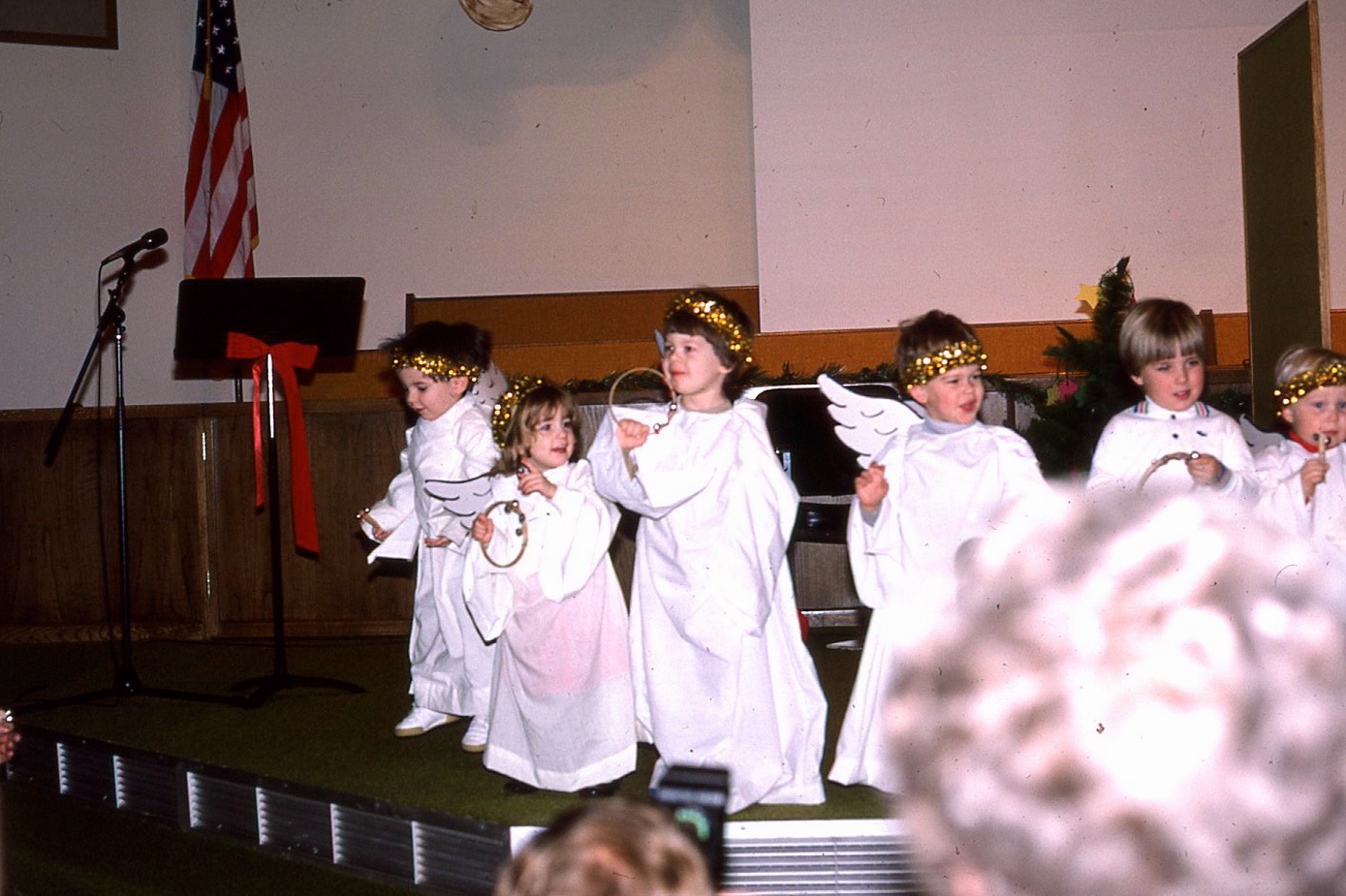
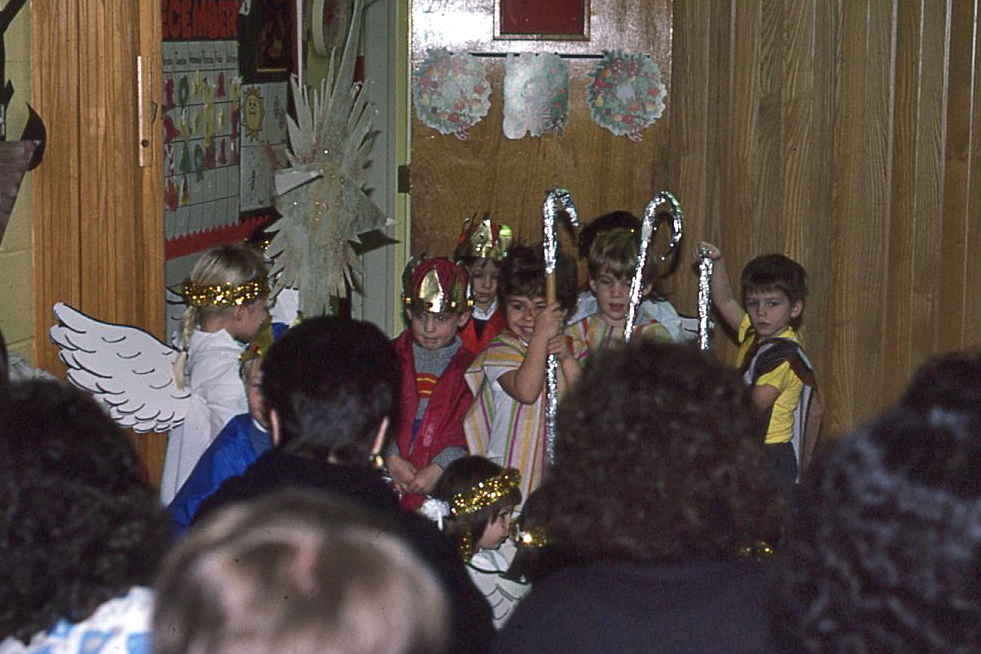
Anticipation of December typically brings memories of the crescendo of events beginning with early celebration of family birthdays (my Grandma’s, my mom’s and my own) and climaxing with Christmas Day.  Lately it is more of a rush of closing out yearend business meetings, eating too much and long checkout lines.  But back in the early 60s life was much simpler.  We didn’t have video games and iPhones.  For recreation, we would play stickball in the street with the sawed off end of a broom.  The 2nd and third steps of the cement staircase leading up to the Serratelli’s house were the strike zone and if you hit it across the street to our house it was a home run.   Or we would have touch football games with the field consisting of three poured sections of concrete in the street.  You got a new set of downs if you got to the crack at the start of the last 3rd of the field.  When it came to Sunday School visual aids, the flannel graph was the primary tool.  Paper cutouts of the Patriarchs or Jesus with felt backing were pressed up on a cloth board and manipulated as the teacher told the story.  The “Davey and Goliath” show was the height of high tech communication.  It is conjured up every time I hear the tune of “A Might Fortress is our God”.

Shortly before Thanksgiving, the plan for the Sunday School Christmas program would be rolled out.  There would be several Saturday mornings of rehearsals prior the main event.  The individual chosen to recite the “welcome” was sure to be either the girl with the softest voice, or the boy with the loudest.  Juvenile speculation would surround the designated actors for Mary and Joseph and the rest of us, as shepherds, wisemen or the heavenly host would have a few lines to be delivered on cue.  The costumes stored in a hallway behind the sanctuary were passed out for the assigned roles, and our moms would either alter or pin them up so we were ready for our dress rehearsal on the final Saturday.

That Sunday night we wouldn’t have to stay dressed up since we had our costumes, and we knew the pastor would not give a sermon, only say a welcome and a prayer over the offering, so we were pretty wired.  Plus we would be getting gifts from our teachers and a full box of chocolate, all our own, from the Sunday School.  (Growing up with 3 siblings there were three times a year that you got candy you could horde as your own: Halloween, Easter and the Christmas program night).  The program itself would have its share of tripped entrances, flubbed lines and every couple of years, a candle would be too close and some girl’s hair would get singed.

This annual event has been repeated in churches around the country not because of the skill of the actors or our taste in family entertainment- it has been repeated because we are celebrating a historical event and engaging in worship.  We are putting on a celebration for God and inviting the audience to celebrate with us.  We are remembering the events of Christ’s birth by reenacting before God, his own miracle.  We are singing to him and for him.

Gradually, during the 80s and 90s, the family video camera intruded on the spectacle to turn the event into a performance on the shelf in the family room.  As we became more discriminating in our tastes we shortened or eliminated the Christmas pageant and were more selective in our musical and theatrical talent, preferring to increase our quality and “relevance”.  Now we can deliver mood, magic and inspiring drama or readings without enlisting the minions of amateurs and wasting shopping days in rehearsals.

I don’t think my church has had a Sunday School Christmas program in at least ten years- and maybe it is silly to think we should go back to that.  But I do want to be able to come together, children, teens, adults, grandparents and celebrate before God for his pleasure.

The Institutionalization of Discipleship

Maybe it is my Baptist roots, maybe it is my naiveté regarding church history or maybe it is a rebelliousness- but it seems that Evangelicals are surrendering to a hierarchical priesthood of professional clergy, paid staff and wisemen rather than diligently taking responsibility for themselves and for one another to encourage, teach, admonish and minister.

Somehow I grew up with the impression that the pastor, church leaders, and teachers were fellow spiritual travellers, maybe more experienced or schooled, but still able to benefit from my youthful spiritual insights and learning as was I from their more seasoned perspective.

When it was testimony time, the floor was open to all.  Prayer meetings were intergenerational (there just weren’t that many of us), and Sunday school was more discussion than lecture.   At summer camp, as a high school counselor, I would either be leading a Bible study of campers or be participating in one with my peers.  The director and senior counselors sat with us in morning devotions as we all shared from the text under review.   In high school and college Bible studies, we would typically rotate responsibility for leading the discussion counting on Holy Spirit’s work within the group to guide our time.

My sometimes selective recollection of Evangelical history brings to mind preachers like DL Moody and Billy Graham who were ready to absorb help from the lay people of the church as quickly as they could be deployed.  Graham’s crusade follow up teams consisted of individuals who were given a training session in how to guide those who came forward and the local churches were enlisted for helping new believers grow in Christ.

Now, it seems that we are less content to subject ourselves to the vagaries of the Holy Spirit working in the body, preferring to vet our leaders through a progression of preparatory steps.  We have discipleship plans that move the participants around a baseball diamond or toward the bull’s-eye on a target as if spiritual growth were assured through so many hours or class sessions.

What did we lose through this?  I think we lost accountability for one another and the ability minister to one another.  We are willing to push responsibility up the chain to the pastor, the elders, the small group leader, the adult.  The hierarchical model not only disempowers the participants but also insulates the leaders.  We become eager to be fed digested truth from above on up the chain rather than doing the hard, patient work of reading, meditation, interaction, and waiting on the Spirit.

One year my son and two friends began a Bible study for high school kids in our home.  My wife, Janet, would meet with them on their preparation and debrief on how it went, but they conducted the study on their own.  It only lasted a season because one of the moms with passion and drive wanted to setup a teen CBS ministry, led by adult discussion leaders and a teaching adult.  It became a bigger ministry, but I’m not sure that it was more conducive to spiritual growth.

Signature Sins

Once again I found myself sitting in the back of the high school Sunday School room biting my tongue as the youth pastor dispensed half-baked ideas regarding spiritual maturity.   The gist of the assessment he was passing on to the group was that they were generally pretty mature and will be able to handle temptation without significant difficulty.  Maybe he was trying to encourage the group that they were on a good path, but my fear was that he was at risk of setting them up for mediocrity in development and confusion regarding their inability to sustain victory in their moral life.

One of the most distinguishing marks I’ve observed in those who I’ve considered more mature in Christ is a healthy sense of humility which does not presume to be beyond the dangers of sin.  What might be interpreted as self-depreciating modesty is really a deep

awareness of their capacity for sin and their daily dependence on Christ’s power and forgiveness.  Christ used a parable of two debtors to illustrate the degree of gratitude for forgiveness of the loan is proportionate to the size of the debt.  By extension, the Pharisees, considering themselves to be good keepers of the law, had less gratitude than the harlot when being extended forgiveness.  The irony is that we would be so foolish as to grade our need of forgiveness relative to each other at all.  It is a loser’s consolation assessed with no ability to see the depth of need.

Michael Mangis wrote a book called “Signature Sins”.  In it he takes the historical Seven Deadly Sins and explores how we often have particular ones which we engage in more than others as part of our “coping structure” to order our world and survive in our own strength.  If you approach this as you would an exercise in discovering your spiritual gifts you might be able to work the formula, identify and cage your demon and elicit sympathy from friends when it raises it’s head.  I found it to be a dark introspection into how the sins to varying degrees have controlled me and defined me and my response to circumstances and people.

The one that is particularly powerful with me is Envy.  My constant tendency has been to evaluate my status relative to others and to desire to be positioned ahead of them- no matter what the metric.   My ability to rejoice with others and even mourn with others has a ball and chain dragging it down – and its name is envy.  If a friend has a new car, I am jealous it is better than mine; if he finds new job after a period of unemployment, I hope he earns less than me; if he is experiencing affliction, I hope mine is greater and if his expression of trust in God is inspiring, I want mine to be more profound.  In measuring happiness I want to experience just a little better, in measuring pain, I want to know mine is greater- whatever the metric is, I want to be further on the scale.  Pretty twisted, huh?

Sometimes we take solace in thinking that we are particularly afflicted like no other before us (except we all pay homage to Job a number 1).  That is a convenient ploy – in allowing God more time to work on us due to our uniquely powerful sin and contributing circumstances, we mask our true desire to feed and find identity in our special victim status.

It was helpful for me to read Thomas a’ Kempis’s, “Imitation of Christ”.  The15th century monk discussed his daily battles with pride, jealousy and other temptations as he lived out his simple monastic life in a way that reminded me that there is no human sanctuary on this earth.  I need to be freed daily from the pull of sin by being reminded of my freedom in Christ, my forgiveness in Christ and his goodness and riches which overwhelm any “good” or “bad” experience or material gain or loss to be had on this earth.  When I live in that reality, I am able to genuinely express joy or sorrow with a brother or sister, without the corruption of envy.  That’s not me in my strength- it is Christ in me.

The Apostle Peter is often seen as the bumbling disciple who overreaches only to be humbled time and again.  Yet I’ve learned to see him more as the one who desires to follow Christ fully, experiences the limitations of human effort and recommits himself to dependence on Christ.  Rather than the youth pastor pumping up the class to move out into their schools and on to college in confidence, I was thinking they would benefit from reflecting on Peter’s adventure out of the boat- He was fine when he fixed his eyes on Christ, but when he ventured to handle it on his own, he quickly sank.  There was no inner faith or strength which he could muster to do it- he needed Christ.

Whether you see a particular sin as “signature” or not isn’t as important as the daily recognition that sin is strong and we will not be successful in our attempts to “manage it”.  With Christ we have both forgiveness and power to overcome sin and replace it with his joy and victory.

Where do I leave off and does God begin? Or: Six Degrees of Tim Tebow

Sitting under a tarp during a rainstorm we three counselors were killing time while our campers were doing their own best to make the most of a down day.  We were on a weeklong climbing trip and at our base camp so there were no indoor activities to fill the time or an alternate destination to slog to.

I think the conversation was within the context of preparing an evening talk for the campers that would connect with both climbing and faith.  One of the counselors was apparently on the trip more for his climbing interest and ability than his faith in that he exhibited a basic indifference to spiritual things.  In spite of growing up in the church and having attended a Christian private high school, he, at this point in his life, seemed to have neatly compartmentalized church and religion well removed from his vocation and other interests.  I was somehow cast as the “most likely to be overzealous” of the three of us so when we started discussing how our faith impacts our climbing, he thought he had fully anticipated my response.

“What does your faith in Christ mean to you as a climber?”

“Well- it’ is just part of who I am and what I do, and if that helps me relate to God and to others in some way I otherwise would not be able to, that’s what it means.”

In “Chariots of Fire”, Eric Liddell says, “When I run, I feel his pleasure”.  Well- he was a world-class runner and I was no world-class climber.  If God was at work in my climbing, he didn’t seem to be giving it much attention.  Frankly, I don’t think God’s focus is on making us great climbers, runners or successful in other ventures.  I think his focus is on working in us to transform us to be more Christ-like.  If being Christ-like leads us to be more diligent and good stewards of our abilities, then we can be confident that we are performing “as unto Christ”.

There was a movie a while back called “Touching the Void” about a climber who survived an incredible ordeal in which he fell into a crevasse and was presumed dead, but crawled to safety over several days.   When asked whether he encountered God during his ordeal, he responded that he had no spiritual epiphany or yearning- there was nothing.  I don’t think he had a need to lie, so I’ll presume that he was truthful.  People do function without an awareness of God.  I won’t assert that they are unaided by God since Christ is declared as the active sustainer of all creation.

As Christians, we acknowledge Christ’s involvement in our entire life.  It betrays a theological naïveté to suggest that there is a point at which God takes a situation we are incapable of handling adequately on our own.  I also have no doubt that there are individuals who do not acknowledge Christ who have accomplishments I will never achieve or have triumphed over some incredible predicament.  The non-Christian has been the unwitting beneficiary of God’s general grace, the Christian can respond in gratitude to his maker and sustainer.

Maybe that’s what underlies the polarizing affect Tim Tebow has on the football world.

(I’ll admit the extent of my knowledge about Tebow consists of a few headlines and articles on Yahoo sports or in Sports Illustrated, and endless segments of Sports Center- And I have no idea how he interprets Gods role in his sports success)

He doesn’t have the right mechanics, he has colossal miscues coupled with a determination to drive for success with whatever skills he has- and he appears to respond both the scorn and praise with humility and recognition of God as his sufficiency.  Tim may or may not develop into an NFL superstar- whether he does or not should not change his testifying to God’s work in his life, which includes who he is as a football player.  The media and the church are much more comfortable giving the microphone to those who are at the top and will tolerate whatever one-liners they throw in about God’s involvement.  Rather than an emerging story of success against all odds or a player personnel selection soon to be revealed as a wasted selection which has delayed Denver’s rebuilding, Tim’s story is about not being ”ashamed of the gospel”- or thinking that God is needs us to be at the top to establish his own credibility.

Somehow I managed to start out climbing and end up talking about a football player, skipping twenty-five years in the transition.   I hope I kept it connected.

School Choice

When I was growing up, my family figured there were three choices for schooling: public, private and parochial.  For us, that meant there was only one choice.  By the time my eldest was old enough for school there were a few more.  So whereas virtually every kid I knew in church, Christian clubs or camp went to public school, my children would grow up with a mix of Christian friends in public school, Christian school, charter school, private school and home school.

We bought our first home back in the 80s when the Fed was wringing inflation out of the economy with 8-10% mortgage interest rates.  Areas of the city that had been starting to show signs of age were becoming gentrified as new homeowners were trying to stake out a real estate claim and affordability was capped by the size of the payments required.  The local elementary school was considered better than most so we figured we should be able guide our kids through the system.

Maybe I had a bit of a romantic view of the public elementary school as the great melting pot of humanity.  It is one of the few situations in life in which you would not choose with whom you would associate.  You were seemingly randomly selected for a class and then seated in alphabetical order with a shuffling of the room assignments at the beginning of each year.  Other than breakouts for reading, we were all locked in the same room for nine months of the year, the smart ones and lazy ones, the populars and off-beats, the bullies and the clowns, and the kid that stayed back from the prior year who was still in reading group C.

By the time you hit high school, you could build some space by self selecting for honors courses, sports, clubs, etc. and you would soon be an adult, able to chose your workplace, your church and which neighbors you would greet.

What I hadn’t yet understood was that many of my interactions outside of work would be built around my children.  Planning schedules, play dates, special events and just pickups and drop offs would create shared experiences that would connect me to the parents of my kids’ classmates.  In the same way that I grew to have more in common with those parents and other families who were in the public school cycle, there was a remoteness growing with those who made other choices.

Within our church, the home school parents were sharing curriculum tips and arranging field trips and the Christian school parents were pulling volunteer duty in the classes and as hall monitors.  The public school parents could be split into those who saw the educators as threats to be combated with clandestine prayer groups and those who were looking for ways to be involved to promote the welfare of the students and school.

Although we tried to check ourselves for any hints of superiority or judgmentalism, I expect some seeped through – if I felt it from others, they probably felt it from me.  Among our peers, it was as if each parent felt an obligation to justify their schooling decision as being the best.  Updates on kids would include the obligatory endorsement and exclamation of how they were thriving in their environment in ways that couldn’t be imagined in another setting.  What I wanted to communicate was that our choices and experiences may provide some insight into benefits and pitfalls of the public school experience but were not an assessment that it was the right choice for them and their child.

As school age approached for our first born, we were not keen on homeschooling.  Janet had read some Edith Schaeffer book in which she extoled the model of the home as a sanctuary.  The dual role of parent and instructor as well as the lack of separation between home and school seemed to mix things up a little too much to fit that model.  Plus, a few years later, we heard an interview on a Christian radio program in which the “expert” stated, “If you child obeys on command, they are a good candidate for home schooling.”  That line gave us some assurance that we likely avoided a colossal mistake by not attempting that route- somehow none of our kids picked up that gene (maybe it wasn’t modeled to them).

Both parents and children experienced our share of challenges and rewards.  We were convinced that our son’s kindergarten teacher smoked a few too many funny cigarettes in her younger days.  She was more into socialization and discovery than drilling the alphabet and numbers and was butchering the pronunciation of our last name for the first three months.  His buddies at school were an African American kid down the street from us and another massive boy who came from a poorer home and loved coming over to play with our son and his toys.  We eventually moved to the burbs where the majority of the boys were medicated with Ritalin and no one walked to school- mom drove or you took the bus.

Our middle child seemed to have two years of fifth grade and two of seventh.  She bounced to Florida and had to reread “Roll of Thunder hear my Cry” during her 6ixth grade class and returned to upstate NY to find that they would tackle Johnny “Tremain” which she went through last year in FL.

On our move to California, we put our youngest in a Christian school for one year, not knowing what to expect, and then moved her back into the public system.  One thing consistent between parents and real estate agents- they are all proud of their schools.

The toughest transition for all three was between sophomore and junior year of high school when they started hanging around at home on Friday and Saturday nights.  It seemed that with the mobility came the alcohol so childhood friends became “daytime friends”.

Did we do what was best for our kids?  I know we wanted to- but “best” isn’t just a choice.  It is a commitment to a long haul- of experiencing the ups and downs together, evaluating and reevaluating decisions together, talking and praying through the latest disappointment or challenge together.  I hope our kids understood that no matter what, we were in their corner and we were trusting God to take our choices actions and redeem them.